
Keeper Notes

Life in the tower was measured by weather, light, and routine.

Keeper accounts describe stewardship as patient, repetitive work: cleaning lens glass, logging sea conditions, and carrying watch through long, isolated hours.

  1. Pre-dawn

    Trim wick and inspect the burner before first coastal traffic appears.

  2. Midday

    Polish prism panes, refill kerosene stores, and update wind and tide logbooks.

  3. Dusk

    Light sequence begins; visibility checks continue as fog and spray thicken.

  4. Night watch

    Rotate shifts, record passing signals, and monitor equipment until dawn relief.
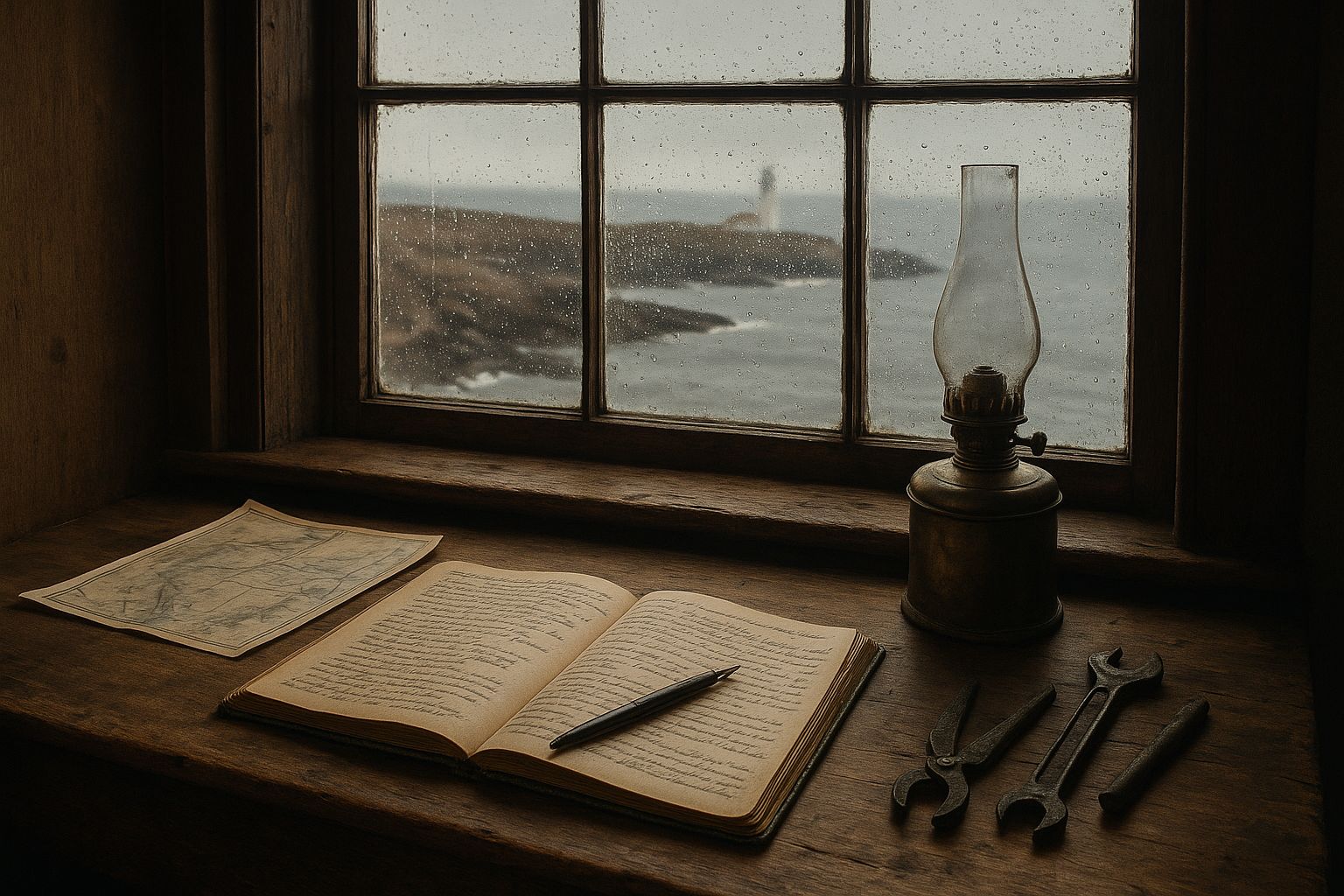
Warm film-style photograph of a lighthouse keeper's workspace with weathered wooden desk, brass oil lamp, handwritten logbook, and a rain-streaked window facing the coast
Lantern room annex, c. 1910s — maintenance desk with log entries and trimmed-wick tools.

Keeper voices

Memories from the northern lights

Short archival quotations gathered from keeper logs and family recollections, preserving the human rhythm behind each coastal beacon.

At dawn the fog bell answered before the gulls did; by then we already knew the sea had changed its mood for the day.

Keeper Elias Morrow, Cape Durness station log, northern headland

We trimmed the lamp glass twice on storm weeks, because salt found every seam before midnight.

Assistant keeper Ruth Ainsley, North Reach tower

Grandmother said the lamp was a second sunrise for fishermen returning to the inlet in winter.

Family memory, Harrow Inlet village

When ice formed on the gallery rail, we took turns tapping it clear so the lens could breathe.

Winter watch note, Bracken Point light